 Is a New Corner Store Coming to Your Neighborhood?
✉️ Want to forward this article? Click here.
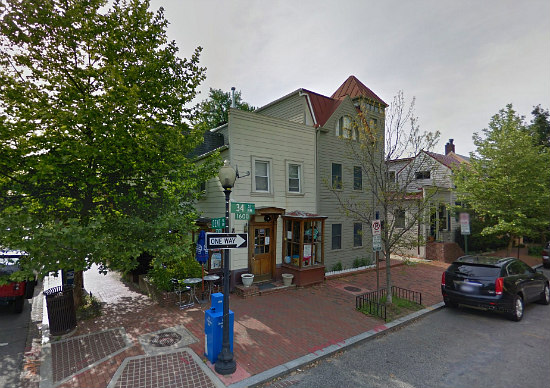
Farah’s Le Petite Grocery and Deli in Georgetown. Google Street View.
The DC Zoning Commission unanimously approved the city’s long-debated zoning changes two weeks ago, and UrbanTurf recently started taking a closer look at the changes that are of most interest to our readership. We continue our exploration of these changes today with a look at the revised regulations regarding corner stores.
While corner stores have historically been built into communities and scattered throughout the city, zoning regulations have grown increasingly prohibitive and discouraging for this type of establishment.
The regulations that will go into effect in September will allow new corner stores, but as the name implies, the new stores must be located on the corner of two intersecting streets. Furthermore, the establishments will need to be at least 500 feet from nearby commercial zones, so as not to take away business in these areas. While new stores will be allowed in R-3 and R-4 zones, they will continue to be prohibited in lower-density R-1 and R-2 neighborhoods, areas dominated by single-family detached homes.
story continues below
loading...story continues above
Allowable uses for a corner store will include general retail, a food store, or an establishment with an art focus. Corner grocery stores which sell fresh perishables and other general foodstuffs will be allowed by-right, but cooking will not be allowed on-site. Alcohol cannot be consumed on the premises, but up to 15 percent of the store’s floor area can be used for sale of packaged beer and wine with a Board of Zoning Adjustment (BZA)-approved exception. The ground floor of the store cannot exceed 1,200 square feet, and use of the cellar level is allowed. The size restriction is aimed at encouraging mom-and-pop shops, rather than nationwide chains, which typically need a larger footprint.
In order to preserve the neighborhood’s residential character, most new non-grocery corner stores would require a BZA special exception. This would also ensure that one community doesn’t have a large concentration of corner stores. Many of the store’s logistical concerns, like hours of operation, garbage collection, appearance, and number of employees will also fall under BZA’s purview.
Similar Posts:
- Zoning Changes in Depth: DC’s New Parking Requirements
- Zoning Changes in Depth: Accessory Apartments
See other articles related to: corner stores, corner stores dc, zoning, zoning changes, zoning code
This article originally published at http://dc.urbanturf.production.logicbrush.com/articles/blog/zoning_changes_in_depth_corner_stores/10821.




UrbanTurf Listings showcases the DC metro area's best properties available for sale.

Most Popular... This Week • Last 30 Days • Ever
A look at the many reasons that prospective homebuyers seeing varying quotes for a 30... read »
A new bill would give builders a shelf of ready-made housing plans that the city has ... read »

Today, UrbanTurf takes a look at the large residential developments in the works for ... read »

Amazon pays up for skipping Wards 7 and 8; IKEA pulls out of Georgetown and Fairfax; ... read »
UrbanTurf Listings is a premium property listings service that showcases some of the ... read »



DC Real Estate Guides
Short guides to navigating the DC-area real estate market
We've collected all our helpful guides for buying, selling and renting in and around Washington, DC in one place. Start browsing below!
First-Timer Primers
Intro guides for first-time home buyers
Unique Spaces
Awesome and unusual real estate from across the DC Metro
